 Local to Lake Livingston
 No obligation to hire
 Free to call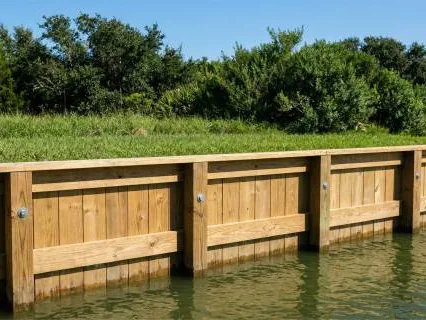
Start with the shoreline, not a catalog
A new bulkhead is part wall, part shoreline system. Before choosing a material, a contractor needs to understand where the wall will sit, how long the shoreline is, how tall the wall needs to be, what access is available, and what is happening behind and in front of the proposed wall.
That site-specific planning matters for an empty lakefront lot just as much as it does for a home that never had a formal bulkhead. It also matters when a new wall will connect to an older neighboring wall, a dock, a boathouse, or another shoreline feature.
Common bulkhead materials
Wood
Treated wood is familiar, easy to understand visually, and can fit the traditional look of a lake property. Its performance depends on the design, materials, installation, and site conditions. TRA's shoreline application materials list specifically references treated wood.
Vinyl
Vinyl sheet materials are used for shoreline walls because they do not rust and can create a continuous face. The right layout still depends on the structure behind the wall, site access, and the shoreline conditions.
Steel
Steel can provide a strong, relatively thin wall system. It can also be heavier to handle and requires the contractor to plan for the material, equipment, connections, and conditions at the site.
Concrete
Concrete may be used in some bulkhead systems where a rigid wall or structural components fit the design. Access, handling, and the specific shoreline plan are important considerations.
No single material is automatically right for every Lake Livingston property. Ask the contractor to explain why a material fits your shoreline and what other components are part of the system.
Materials listed by TRA
TRA's published shoreline application materials list includes 6x6 treated pilings, all galvanized hardware, and all treated wood. That list does not replace the contractor's project-specific design, but it is one reason to discuss the permit package and material list early instead of after materials have already been ordered.
How long does a new bulkhead take?
The timeline depends on the job, the contractor's schedule, and TRA approval. Shoreline length, access, removal work, backfill, and whether the bulkhead is part of a larger dock or boathouse project can all affect how the contractor plans the work. It is better to ask for the current schedule for your specific property than to rely on a generic timeline.
Think ahead if a dock or boathouse is next
If you already know you want a boathouse, pier, lift, or other shoreline feature, tell the contractor while the bulkhead is being planned. Coordinating the layout can help the contractor think through access and how the pieces meet. The permit package may also need drawings and project details for the improvements you plan to build.